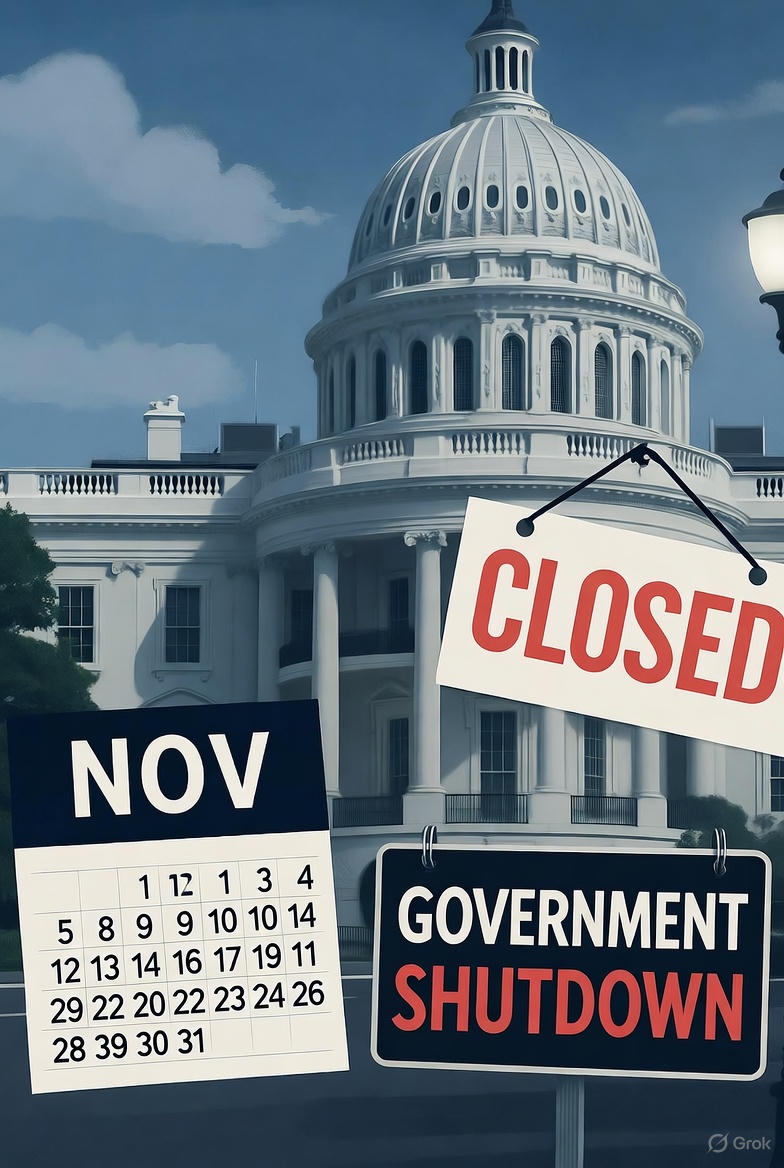
The federal government shutdown has already lasted 23 days, making it one of the longest in U.S. history and showing no immediate signs of resolution. Triggered by a partisan deadlock over funding bills, particularly disputes on extending Affordable Care Act subsidies and broader policy cuts under the Trump administration, the impasse has Republicans and Democrats entrenched in their positions. If this standoff persists into November, the consequences could escalate significantly, affecting millions of Americans through disrupted services, economic strain, and heightened political tensions. Here’s a breakdown of what experts and analysts anticipate based on current trends and historical precedents.
Impacts on Federal Workers and Contractors
Approximately 750,000 federal employees are currently furloughed, with another large segment working without pay, including essential personnel like air traffic controllers and law enforcement. By November, these workers could miss multiple paychecks, leading to severe financial hardship—many live paycheck to paycheck, potentially facing evictions, increased debt, or reliance on food banks. Unlike past shutdowns, the Trump administration has initiated mass layoffs, targeting over 10,000 positions in agencies like Health and Human Services and Education, though a court has temporarily halted some of these. Contractors, who don’t receive back pay, face even greater risks, with daily federal contracts worth $800 million halted, impacting small businesses and their employees.
If extended, long-term effects might include permanent job losses and a loss of institutional knowledge in government agencies, complicating future operations. Community support, such as expanded food bank distributions in areas like Washington, D.C., may become overwhelmed.
Disruptions to Essential Services and Programs
Essential programs like Social Security and Medicare will continue, but new applications and verifications could face delays. More critically, SNAP (food stamps) funding is projected to deplete by early November, potentially cutting aid for 42 million low-income Americans and exacerbating food insecurity. National parks, museums like the Smithsonian, and tourist sites remain closed, with flight delays worsening due to air traffic controller shortages—thousands of flights have already been affected.
Immigration services, small business loans (halting $860 million weekly), and flood insurance issuances are paused, stalling real estate and business activities. The administration has also canceled billions in infrastructure projects, such as a New York-New Jersey rail tunnel and clean energy grants in Democratic-leaning states. Nuclear security operations have furloughed staff, raising concerns about national safety.
Into November, these disruptions could lead to irreversible cancellations of projects, broader public health issues from lapsed health insurance subsidies, and chronic aviation delays impacting Thanksgiving travel. Analysts warn of a “deeper economic hit” from denied back pay and fired workers, diverging from historical norms.
Economic Consequences and Broader Ripple Effects
The shutdown is already subtracting about 0.1-0.2 percentage points from GDP growth per week, with weekly losses estimated at $15 billion. Travel industry impacts alone could reach $1 billion weekly from closed attractions. Delayed economic data releases, like jobs reports and CPI, are leaving the Federal Reserve “operating blind,” potentially complicating rate cuts and increasing market volatility. Asset classes show muted reactions so far, but prolonged uncertainty could weaken consumer confidence and reduce spending, especially as the holiday season approaches.
If it lasts into November, the shutdown could become the longest on record by November 4, entering “uncharted territory” with cumulative GDP losses exceeding $50 billion and harder-to-recover effects. Holiday shopping in November and December might suffer, hurting retail and broader economic productivity. Regional disparities could widen, with blue states facing disproportionate project cancellations
Political Ramifications and Path to Resolution
The blame game intensifies, with Republicans accusing Democrats of obstruction and Democrats labeling GOP tactics a “political ploy.” Public opinion is split, with 60% blaming Trump and Republicans, potentially influencing the 2026 midterms. Leverage points, like military pay and SNAP depletion, may force negotiations by early November, but entrenched positions suggest a stalemate.
Resolution could come via a compromise on health subsidies or a clean funding bill, but without bipartisan talks, the shutdown might drag on, amplifying all aforementioned issues.
In summary, an extension into November 2025 would transform the current shutdown from a temporary disruption into a profound crisis, with lasting scars on workers, services, and the economy. As pressures mount, the coming weeks will be critical in determining whether compromise prevails or gridlock endures.